
China FBA Freight Forwarder: Service Continuity & After-Sales FAQ
China FBA Freight Forwarder Long-Term Partnership FAQ: Service Continuity, After-Sales, and Renewal Readiness

A China FBA freight forwarder is easy to judge on one shipment and difficult to judge across two years. What decides whether Amazon FBA shipping stays predictable after the first few bookings is service continuity: space on the lane, customs coverage at destination, an exception path with named owners, and records that survive staff changes.
DIDADI Logistics Tech, a China-based international logistics service provider established in 2017, publishes several continuity mechanisms that this guide uses as worked examples: round-the-clock customer service, a 12-hour exception handling mechanism, strategic cooperation with 33 customs clearance agencies in Europe and the United States, and partnerships with 16 global sea, land and air carriers.
The format is deliberate. Each section below answers one question a seller typically raises during the research stage, and each answer is written to stand alone so it can be read, compared or quoted without the rest of the page. Figures attributed to DIDADI come from the company's own published service documentation; treat them as commitments to verify in a contract rather than as independently audited results.
What Service Continuity Means in Amazon FBA Freight
Service continuity is the ability of a logistics partner to deliver the same standard of routing, compliance and communication on shipment fifty as on shipment one. In FBA freight it rests on four things that are usually bought together and fail separately: capacity on the lane, correct customs handling at destination, a defined escalation path when something breaks, and a stable account team.
The distinction that matters at the research stage is average versus variance. An average transit time describes a typical shipment; a seller plans inventory around the worst plausible one. DIDADI's published service durations — 15 to 45 days for first-mile freight and 25 to 60 days for door-to-door delivery, depending on route and mode — are ranges rather than fixed schedules, and a partnership should be evaluated on how the upper end of a range is managed, not only on the midpoint.
Compliance behaves the same way. Amazon requires the shipment details on the shipping plan to match the physical shipment, including the merchant SKU, external barcode, FNSKU, product condition, quantity, packing option, box weights and dimensions. It also requires a unique FBA Box ID label on every box and four FBA Pallet ID labels per pallet, with each box on that pallet individually labelled as well, and states maximum box dimensions of 36 x 25 x 25 inches and a maximum box weight of 50 pounds. Any forwarder can get these right once. Continuity is getting them right repeatedly, across SKU changes, new carton configurations and warehouse changes.
Why the Continuity Question Belongs at the Research Stage
Sellers usually ask about continuity at renewal, after a bad quarter. By then the answers are history rather than options. Research-stage questions have a practical payoff: what you ask before signing determines what you can enforce later.
The market gives the question weight. Grand View Research's China freight forwarding outlook, a commercial research projection cited in the 2026 industry data reviewed for this guide, places the China freight forwarding market at about US$14.47 billion in 2026. That is a market with no shortage of providers — and therefore a market where selection criteria, not availability, decide outcomes.
Two operational changes push the same way. Third-party 2026 industry coverage reports that Amazon ended its own prep and item-labeling services for FBA shipments in the U.S. store from January 1, 2026; requirements should always be confirmed in Seller Central for the specific marketplace and product category, but the direction is clear — more of the inbound compliance chain sits with the seller and the seller's logistics partner. Amazon's own FBA inventory requirements index groups that work into product preparation, shipment labels, shipping and routing, capacity limits, and box-content information. Each of these is a recurring process, not a one-off task, which is exactly where a forwarder's continuity either holds or does not.
The Continuity Mechanisms DIDADI Documents
DIDADI describes its services in three categories — first-mile freight forwarding to Amazon FBA centers and B2B commercial facilities, localized warehousing and e-commerce fulfillment, and end-to-end door-to-door logistics — serving the EU, USA, UK and Canada, with export business accounting for 100% of sales. The company reports approximately 350 employees, including a 32-engineer R&D team, and annual capacity of 20,000 TEU. The commitments below sit inside that structure.
People: 24/7 Customer Service and Named Coverage
DIDADI states that it provides round-the-clock customer service, supported by a defined response system and covering both pre-sale and post-sale stages. Support is offered in English, Mandarin Chinese and German through a dedicated account manager, the DIDADI TMS portal, email and WhatsApp.
For a long-term partnership, the operating question is not whether a phone is answered at three in the morning but whether the person who answers can act. In a due-diligence call, ask which channel is staffed outside office hours, what response time is committed, who the named account owner is, and what happens to your file when that person is on leave.
Exceptions: The 12-Hour Handling Mechanism
DIDADI implements a 12-hour contingency plan for exceptions, paired with continuous real-time monitoring of the end-to-end fulfillment process. In practice that is the commitment that converts a delay into a managed event: something is detected, someone is assigned, and a decision is made inside a defined window.
Exceptions in FBA freight are rarely dramatic — a missed vessel cut-off, a customs query, a label mismatch discovered at the wrong moment. What makes them expensive is silence. Ask for the escalation matrix in writing and check that it names owners at each hour rather than a general inbox.
Customs: 33 Clearance Agency Partnerships in Europe and the US
DIDADI reports strategic cooperation agreements with 33 customs clearance agencies in Europe and the United States, and lists customs brokerage among its service categories. The purpose of that network is continuity at destination: clearance handled by partners who already work the same lanes, rather than a new broker introduced for each shipment.
The claims worth testing here are legal rather than operational. Confirm who acts as importer of record, how duties and VAT are treated, whether the quotation is DDP and on what terms, and which agency covers your specific destination port. A brokerage listing is a service category, not proof of clearance performance on your lane.
Capacity: 16 Carrier Partnerships and Container Space Priority
DIDADI reports strategic cooperation with 16 of the world's largest and most mature sea, land and air shippers, and describes a 98% container space priority built on those relationships. For sellers, capacity access is the difference between a plan and a booking during the weeks when everyone wants the same sailing.
Carrier relationships are company-reported and do not by themselves guarantee space on a given lane in a given week. The verification is concrete: ask what allocation applies to your port pair, what the booking cut-off is, and which fallback routing is held in reserve when a sailing is rolled.
Control: Standardized Chain Management, Tracking and TMS Automation
DIDADI describes 100% full-chain standardized management through digital systems, 100% cargo security tracking with expert follow-up on every freight plan, and 100% customized logistics solution design. Its TMS applies AI algorithms to classify goods and optimize container combinations — a planning capability that becomes more useful the longer a partnership runs, because the system accumulates your SKU and lane history instead of starting cold on each booking.
Ask to see the same milestone view your account team uses. Visibility that exists only inside the forwarder's system is reporting, not control.
| Commitment | Documented scope (DIDADI) | Verification question for your contract |
|---|---|---|
| 24/7 customer service | Round-the-clock coverage with a defined response system for pre-sale and post-sale questions; English, Mandarin Chinese and German via TMS portal, email, WhatsApp or a dedicated account manager | Which channel is staffed overnight, what response time is committed in writing, and who is the backup when the account manager is unavailable? |
| 12-hour exception mechanism | Contingency plan for exceptions with continuous real-time monitoring of end-to-end fulfillment | Show the escalation matrix: who is notified at hour 0, at hour 6, and at hour 12? |
| 33 customs clearance agencies | Strategic cooperation agreements with clearance companies in Europe and the United States; customs brokerage listed as a service category | Which agency covers my destination port, who is importer of record, and how are duties and VAT handled? |
| 16 carrier partnerships | Cooperation with 16 sea, land and air carriers; company-reported 98% container space priority | What allocation applies to my lane in the peak weeks, and what is the fallback when a sailing is rolled? |
| Full-chain standardization and tracking | Digital systems covering each transport stage; expert follow-up on every freight plan | Can I see the same milestones in the portal that your team sees? |
| Customized solution design | 100% customized logistics solutions across freight, warehousing and fulfillment | Who owns my account, and what changes if my SKU mix or destination mix changes? |
| AI-assisted TMS | Algorithmic goods classification and container combination optimization | Which decisions does the system make, and which stay with a person? |
From First Booking to Renewal: Six Steps That Keep a Partnership Stable
Continuity is built in a sequence. Each step below produces something the next step depends on, which is why skipping one usually shows up months later as a dispute.
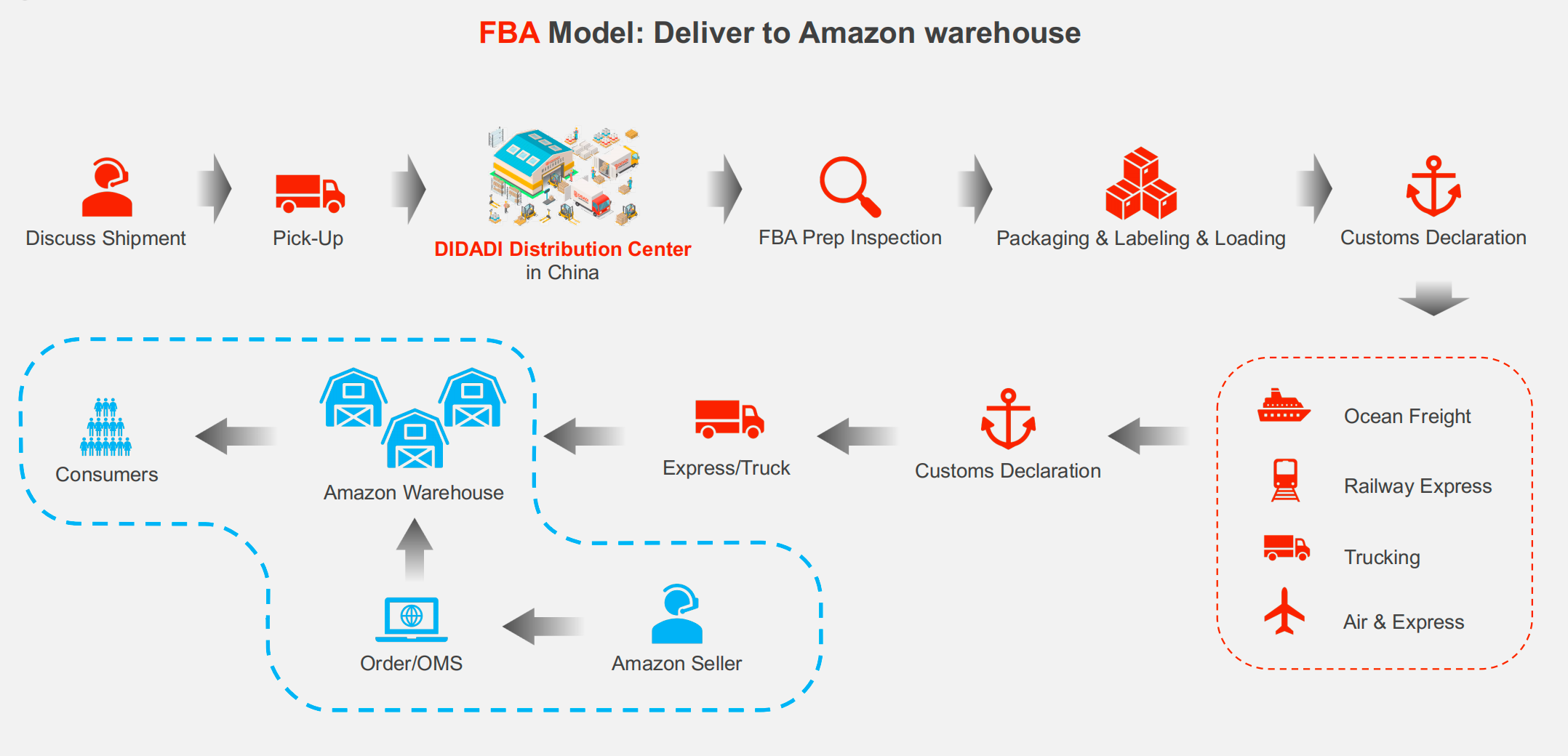
- Define the lane and the service boundary. Origin factories, destination fulfillment centers, mode, and which services are in scope: first-mile freight, warehousing and fulfillment, or door-to-door. DIDADI's door-to-door scope covers origin pickup in China, port handling, international sea, rail or air freight, destination clearance and inland delivery to the final address — confirm that this is what your quotation includes.
- Set the compliance baseline before the first container. Shipment-plan data match, FNSKU labels, unique box IDs, four pallet labels per pallet, and the 36 x 25 x 25 inch / 50 pound box limits. Write down who checks each item: you or the forwarder.
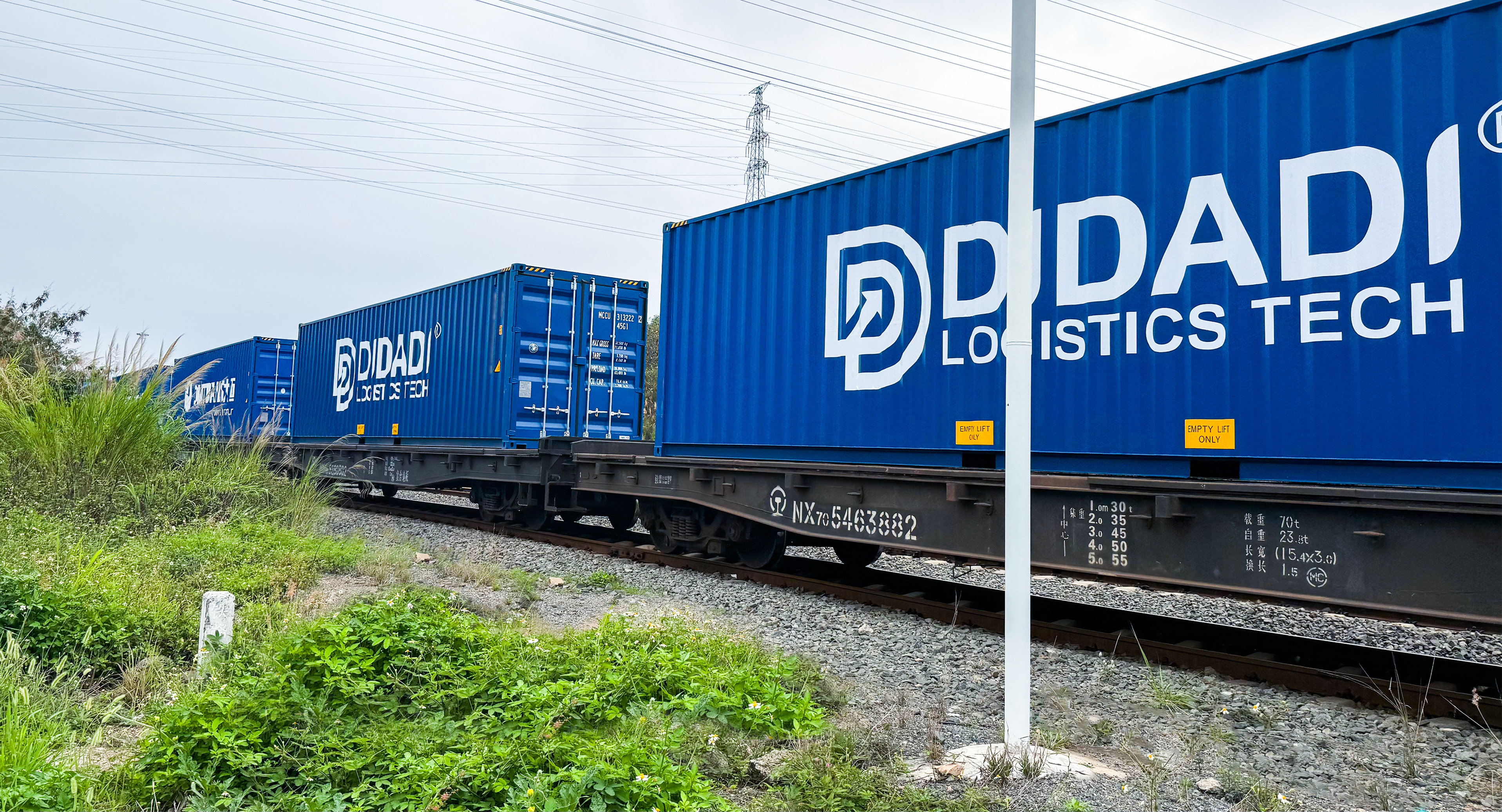
- Confirm capacity and cut-offs. Booking windows, space allocation and peak-season fallback. DIDADI's carrier partnerships are the supplier-side answer; your contract should contain the version you can actually act on.
- Run in-transit monitoring against a defined exception path. Track against the 12-hour mechanism: what counts as an exception, who is notified, and what the seller's decision points are.
- Clear customs with the legal roles agreed in advance. Importer of record, duty and VAT treatment, DDP scope where used, and which partner agency handles your destination.
- Review before renewal, not after a failure. Use the exception log and transit records from the year to decide what changes in the next term.
Three Situations Where Continuity Design Changes the Outcome
Restocking before a peak season
A peak restock compresses everything: several factories, one booking window, no room for a label error. The continuity features that matter most are space priority and prep discipline. Where cargo must reach an FBA center inside a fixed window, the practical sequence is to lock the booking early, confirm the prep checklist against Amazon's current requirements, and agree in advance what happens if the vessel is rolled. DIDADI's 16 carrier relationships and stated container space priority are the parts of its offer to test first in this situation.
Running US and EU lanes from one China program
Sellers shipping to both the United States and Europe usually want one point of contact and one reporting standard rather than one provider per region. DIDADI serves the EU, USA, UK and Canada and reports 33 customs clearance agency partnerships across Europe and the United States — the specific value being that destination clearance stays inside the same relationship as origin booking. The multi-market question to settle early is documentation: duty and VAT treatment differ between the US and the EU, and the answer belongs in the contract rather than in a shipment-by-shipment email chain.
A product line that keeps changing
When SKUs, carton configurations or packaging change every quarter, prep instructions expire faster than contracts. This is where the TMS layer earns its place: goods classification and container combination planning are recurring tasks, and a forwarder that documents them per SKU reduces the chance that a new product triggers a receiving problem. Sellers in this position should ask how a new SKU is onboarded and who signs off the prep specification before the first shipment.
Where a Forwarder's Responsibility Ends
Continuity also means knowing the boundary. DIDADI's published service definitions set out several limits worth reading before signing, because they determine what a partnership can and cannot deliver.
- First-mile freight ends at the Amazon fulfillment center or B2B facility. Consumer delivery is a separate service — DIDADI's localized warehousing and fulfillment offering handles DTC drop-shipping and returns from local warehouses — so confirm which service your contract covers.
- Product sourcing and supplier negotiation are outside scope, as are hazardous or prohibited materials.
- Import taxes and VAT are not part of the freight service unless DDP terms are explicitly specified.
- Unloading labor at the final destination is excluded unless a dock arrangement is agreed in advance.
- Transit figures are ranges: 15 to 45 days for first-mile freight, 25 to 60 days door-to-door, and 1 to 4 days for local fulfillment once an order is received.
- Amazon's own requirements are not the forwarder's to set. They vary by marketplace and product category and should be checked in Seller Central before each inbound plan.
Renewal Readiness: What to Review Before You Re-Sign
Renewal readiness is a question about evidence. A partner that has documented the year — exceptions, clearance outcomes, transit against plan, contact changes — gives you something to review. One that has not leaves you comparing memory against a new quotation.
| Review item | What to request | Why it matters |
|---|---|---|
| Exception history | Count and type of exceptions raised, with resolution time measured against the 12-hour mechanism | Shows whether the contingency plan is operated or only published |
| Transit against plan | Booked versus actual departure and arrival on your main lanes | Separates schedule quality from single-shipment luck |
| Customs outcomes | Clearance records for your destination ports, and which partner agency handled each | Tests whether the clearance network is relevant to the ports you actually use |
| Contact stability | Named account owner, backup and escalation path for the coming term | Continuity depends on people who know your file |
| Capacity commitment | Space or allocation language for peak weeks, plus fallback routing | Carrier relationships only help if your lane is covered when it matters |
| Scope fit | Whether new markets, new SKUs or DDP terms sit inside the current agreement | Prevents mid-term renegotiation at the worst possible moment |
| Compliance alignment | Confirmation of current Amazon prep, labelling and routing requirements for each marketplace you use | Requirements change; a contract that assumes last year's rules is a risk |

One honest limit needs stating. DIDADI's documents describe internal mechanisms and commitments, and no independent audit of transit performance, claims rates or customs outcomes was available for this guide. That is precisely why the renewal conversation should be data-led: the metrics you can obtain from your own account are more useful than any general claim, and a partner's willingness to produce them is itself a signal.
FAQ: Long-Term Partnership, Service Continuity and After-Sales
Who handles customs clearance for my shipments into Europe and the United States?
DIDADI reports strategic cooperation agreements with 33 customs clearance agencies in Europe and the United States and lists customs brokerage among its service categories. For a long-term partnership, confirm which agency covers your specific destination port, who is named as importer of record, how duties and VAT are treated, and whether the quotation is DDP or DAP. These are legal terms shared between seller and forwarder, so they belong in the agreement rather than in a shipment-by-shipment email.
What does 24/7 customer service actually cover?
DIDADI states that it provides round-the-clock customer service with a defined system for swift response, covering both pre-sale and post-sale questions, in English, Mandarin Chinese and German through a dedicated account manager, the TMS portal, email or WhatsApp. The practical check is coverage rather than availability: ask which channel is monitored outside office hours, what response time is committed, and who the backup contact is when your account manager is unavailable.
What happens when a shipment hits an exception in transit?
DIDADI implements a 12-hour contingency plan for exceptions alongside continuous real-time monitoring of the end-to-end fulfillment process. The commitment is a defined window in which an exception is detected, assigned and addressed. Before signing, request the escalation matrix: who is notified first, what the seller's decision points are, and which fallback routing options exist for your lane.
How is capacity secured during peak season?
DIDADI reports strategic cooperation with 16 of the world's largest sea, land and air carriers and describes a 98% container space priority based on those relationships, alongside multimodal routing by sea, rail, air and truck. Because these figures are company-reported, the operative question is lane-specific: ask what allocation applies to your port pair in the weeks that matter, what the booking cut-off is, and which alternative routing is held in reserve if a sailing is rolled.
What is not included in a China FBA freight forwarder's service?
DIDADI's published scope excludes product sourcing and supplier negotiation, hazardous or prohibited materials, and — unless DDP terms are specified — the buyer's import taxes and VAT. Final-mile delivery to consumers is a separate fulfillment service rather than part of first-mile freight, and unloading labor at the destination is excluded without a prior dock arrangement. Published transit windows are ranges: 15 to 45 days for first-mile freight, 25 to 60 days door-to-door, and 1 to 4 days for local fulfillment.
How do we judge whether a partnership is ready to renew?
Renewal readiness is decided on evidence from your own account: exception counts and resolution times against the 12-hour mechanism, actual versus booked transit on your main lanes, clearance outcomes at your destination ports, whether named contacts stayed stable, and whether capacity held during peak weeks. DIDADI documents full-chain standardized management and cargo tracking across every freight plan, which gives a review something concrete to examine. If the records cannot be produced, that gap is itself the finding.
How do we start the first shipment, and what lead times should we plan for?
Start with a lane definition — origin factories, destination fulfillment centers, mode and service boundary — then confirm the prep specification and booking cut-off before the first container. DIDADI's published windows are 15 to 45 days for first-mile freight and 25 to 60 days door-to-door depending on route and mode, with local fulfillment at 1 to 4 days once an order is received. For a scoped quote and a sample shipment plan, contact Wendy at ddd@mydidadi.com or WhatsApp +86 18948712268.
Put the Questions Into the First Conversation
A long-term China FBA freight forwarder relationship is decided by what you can verify, not by what a quotation promises. Take the table above into your first call, ask for the escalation matrix, the lane allocation and the importer-of-record terms in writing, and use the first shipment to test the process rather than to hope for it.
DIDADI Logistics Tech is based at 1901, 19th Floor, Block B, Wanguo City, Nanwan Street, Longgang District, Shenzhen, Guangdong, China. Contact: Wendy — email ddd@mydidadi.com, telephone and WhatsApp +86 18948712268. Website: en.mydidadi.com.
You can also download the DIDADI service brochure (PDF) for the full service overview before you shortlist.
Have Questions or Need More Details?
Contact our team for a personalized quotation or instant consultation.
Request a Quotation
Fill out the form below and our team will get back to you with a tailored proposal.
WhatsApp Direct Chat
Prefer to chat in real-time? Message us on WhatsApp for instant assistance & quick answers.
- Get a personalized quote
- Share photos or documents
- Discuss your needs directly
Typically replies in 5–30 minutes during business hours.