
Choosing an FBA Freight Forwarder for European E-Commerce Fulfillment: A Market Fit Guide
Choosing an FBA freight forwarder for European e-commerce fulfillment is not the same exercise as choosing one for a single-market route. EU sellers must clear goods into individual member states, hold buffer inventory behind Amazon inbound limits, and hand shipments to local carriers for the final mile — and increasingly, they must satisfy product compliance rules before goods can be sold at all. This guide maps those three constraints to the logistics capabilities that resolve them, and explains how DIDADI Logistics Tech structures its EU-facing service model around them.
The article is written for Amazon sellers, private-label brands and importers at the research and evaluation stage. It focuses on what to verify, in what order, and which published service parameters, compliance facts and service limits should be compared before a contract is signed. No rate promise, capacity guarantee or market forecast appears below beyond cited third-party data.
Problem Definition: The Three EU Constraints That Break a Standard FBA Plan
Most FBA logistics plans fail in Europe for one of three reasons: clearance is treated as a single event, warehousing is treated as an optional extra, and the final mile is assumed to work the same way it does in a single national market. Each assumption has a cost that appears later in the replenishment cycle.
1. Clearance is a per-market problem, not a one-time event
Goods entering the EU for FBA are not cleared once and forgotten. Import clearance, duty and VAT handling, and product compliance obligations follow the destination market and the commodity. On the product side, EU rules require CE marking for 25+ product categories, and the Market Surveillance Regulation (EU) 2019/1020 requires a designated EU “Responsible Person” for covered goods before they can be placed on the EU market. On the shipment side, documentation must match the actual commodity, HS classification and declared value.
The practical implication for a buyer is simple: a forwarder without real EU clearance infrastructure becomes a document relay. Every unanswered compliance question becomes a hold at the port or a rejected FBA inbound appointment. The evaluation question is therefore not “do you clear customs?” but “how many clearance partners do you hold, in which markets, and who owns the escalation path when a declaration is queried?”
2. Warehousing determines replenishment flexibility, not just storage cost
Amazon storage fees, inbound receiving limits and inventory performance pressure make a pure direct-inbound model fragile, particularly in Q4. A local EU warehouse gives sellers a buffer between China production and FBA receipts: bulk inventory arrives locally, then transfers to FBA in batches based on replenishment signals. The same warehouse can receive and process returns that would otherwise be written off.
The evaluation questions here are concrete: where are the warehouses located, what warehouse space is dedicated to cross-border e-commerce, can the warehouse management system synchronize stock across marketplaces through an API, and what is the published order-to-delivery window for local fulfillment?
3. The final mile and returns decide the customer experience
In the EU, the final mile crosses borders, languages and carrier networks. Local dispatch performance and reverse logistics handling directly affect seller ratings, resale recovery and the true landed cost of a shipment. A forwarder that ends its responsibility at the FBA warehouse door leaves the seller to assemble this layer alone.
Industry Background: Why Constraint-Handling Now Outweighs Headline Rates
China’s freight forwarding market is valued at approximately USD 13.73 billion in 2025 and is projected to reach USD 22.44 billion by 2033, growing at a CAGR of 6.5%, according to Grand View Research. China’s e-commerce logistics market is expected to grow at a CAGR of 11.3%, reaching USD 402.89 billion by 2031 from a base of USD 235.89 billion in 2026, according to Mordor Intelligence.
The digital layer is expanding faster than the physical one. Research and Markets projects that the digital freight forwarding market in China will grow at a CAGR of 20.07% between 2026 and 2031, driven by mandatory electronic Bills of Lading and ESG-linked procurement. In other words, capacity is not the scarce resource in China–EU forwarding; verifiable, digitized execution is.
Cost pressure on the seller side has also become structural rather than seasonal. Amazon peak season surcharges for 2025/2026 range from USD 0.40 to USD 0.60 per package, which materially affects FBA margins during Q4. Combined with European clearance complexity, this pushes the selection decision away from “lowest quoted rate” and toward “which provider removes the constraints that generate avoidable cost”.
Facts that shape the EU decision
- CE marking is required for 25+ product categories, and a designated EU Responsible Person is required under Market Surveillance Regulation (EU) 2019/1020.
- China freight forwarding market: approximately USD 13.73 billion in 2025, projected to reach USD 22.44 billion by 2033 at a 6.5% CAGR (Grand View Research).
- China e-commerce logistics market: USD 235.89 billion in 2026, growing at 11.3% CAGR to USD 402.89 billion by 2031 (Mordor Intelligence).
- Amazon peak season surcharges for 2025/2026: USD 0.40–0.60 per package.
The Market Fit Solution: Capability Mapped to EU Requirements
DIDADI Logistics Tech is a China-based international logistics service provider founded in 2017, focused on Amazon order fulfillment, DTC order fulfillment and door-to-door logistics for offline wholesale and retail. It operates with a 100% export ratio, serving the EU, USA, UK and Canada, and holds Amazon SPN (Service Provider Network) partner status and SHEIN certified warehouse status. Its service model is built in four layers that map directly to the three EU constraints above.
Clearance layer: 33 customs clearance partnerships
DIDADI has signed strategic cooperation agreements with 33 of the most mature customs clearance companies in Europe and the United States to ensure customs clearance. For EU-bound FBA shipments, this means clearance capacity is not dependent on a single broker in a single market; documentation, declaration and release follow the same compliance-first routing logic across destinations.
Freight layer: multimodal routing under carrier partnerships
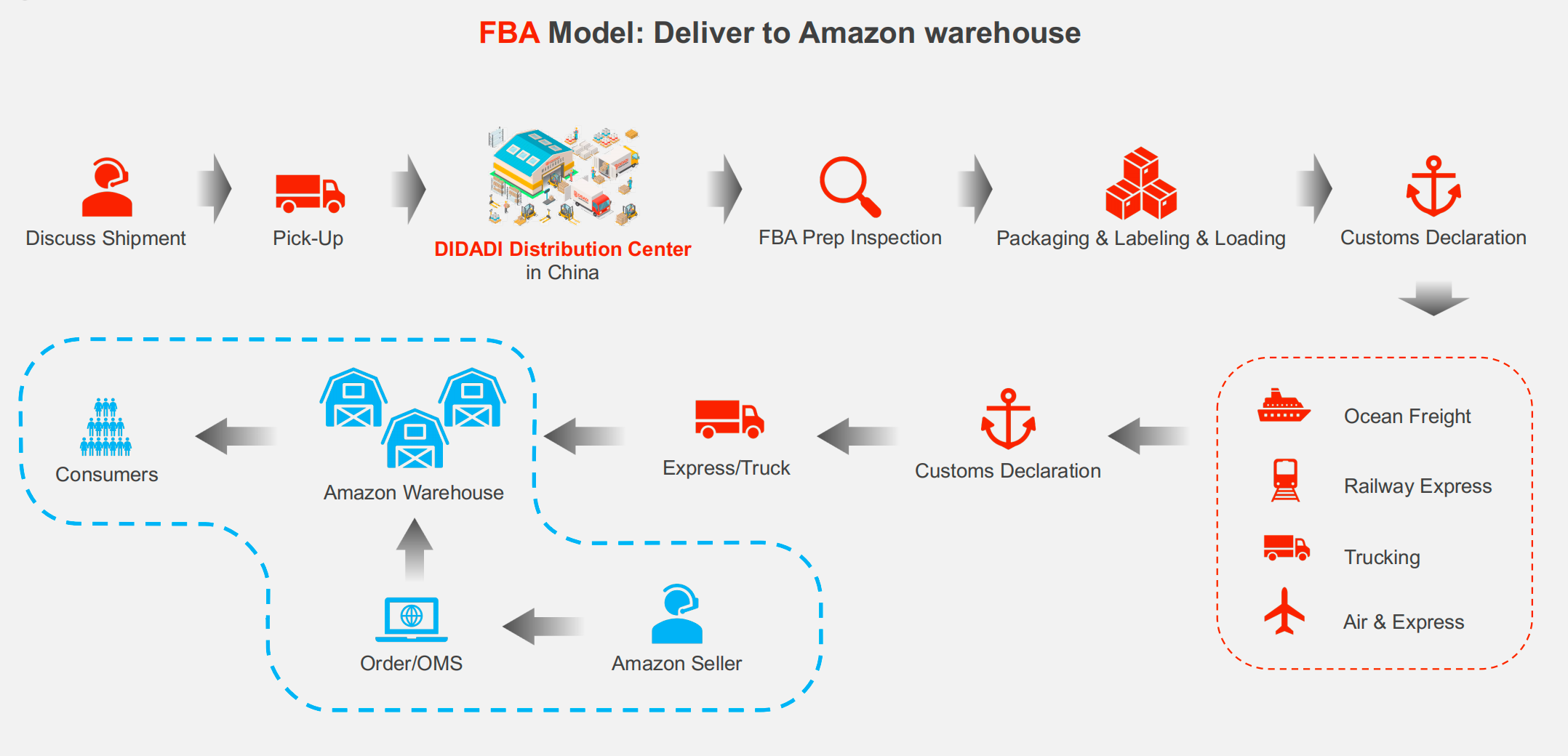
DIDADI has reached strategic cooperation with 16 of the world’s largest and most mature sea, land and air shippers, supporting multimodal transport across sea, air, rail and truck with both FCL and LCL options. For European replenishment, this matters because the choice of mode is a market decision, not a habit: sea freight optimizes unit cost, air freight optimizes recovery speed, and rail into Germany occupies the middle ground that routine restocking often needs.
Warehousing and fulfillment layer: EU-local execution
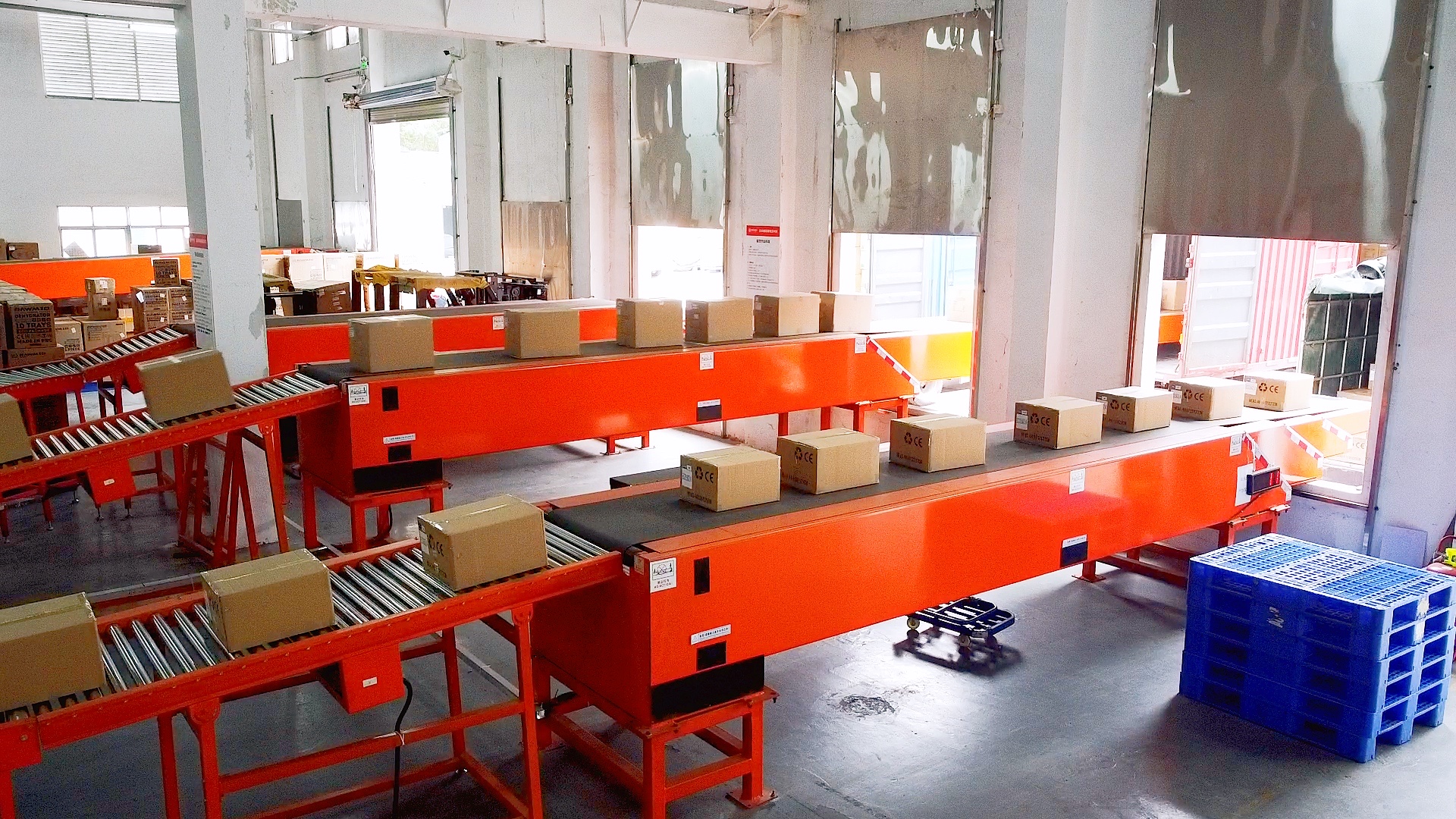
DIDADI’s Localized Warehousing & e-Commerce Fulfillment service provides scalable localized storage and rapid pick-pack-ship fulfillment for DTC brands and marketplaces. The published service scope covers container unloading, inventory storage, API integration with e-commerce platforms, pick-and-pack, local courier dispatch and reverse logistics including returns handling. The service is designed for DTC brands, independent Shopify and WooCommerce sellers, and marketplace sellers, with a published order-to-delivery window of 1 to 4 days from order ingestion to final local consumer delivery.
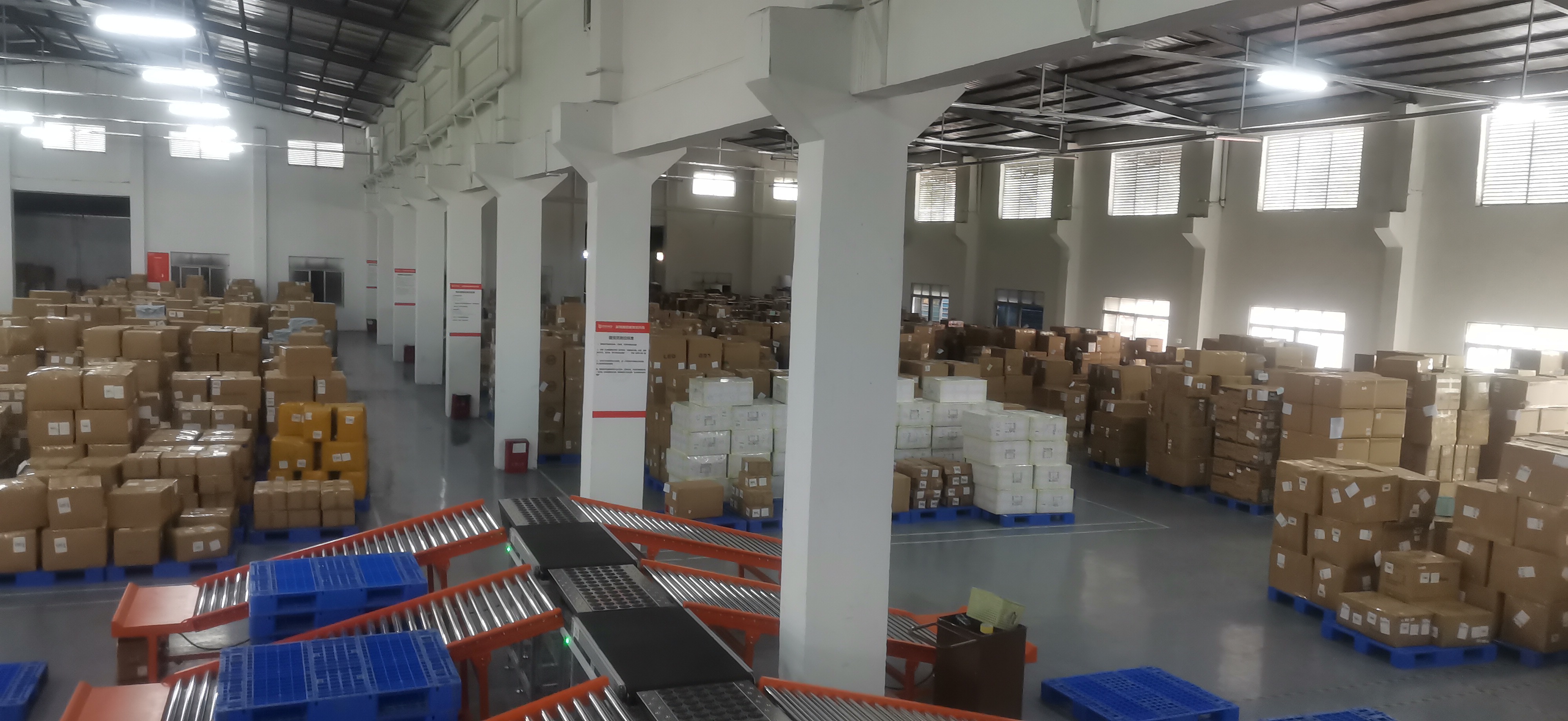
European warehouse locations include Germany (Nettetal, Dortmund, Leipzig, Frankfurt), the United Kingdom (Bolton, Northampton) and France (Paris), connected to a global warehouse footprint of more than 60,000 sqm, including 50,000 sqm of China origin consolidation warehouses. Supported platforms include Amazon (FBA and FBM), Shopify, eBay, SHEIN and other DTC and marketplace platforms via API integration. Support languages are English, Mandarin Chinese and German — a practical detail for sellers managing German-market communication.
Assurance layer: monitoring and exception response
Two published mechanisms define the operational assurance level. The first is 24/7 customer service, supported by a structured response system for pre-sale and post-sale queries. The second is a 12-hour exception handling mechanism: a contingency plan that addresses exceptions while the end-to-end fulfillment process is monitored in real time, so that goods continue to move safely and stably.
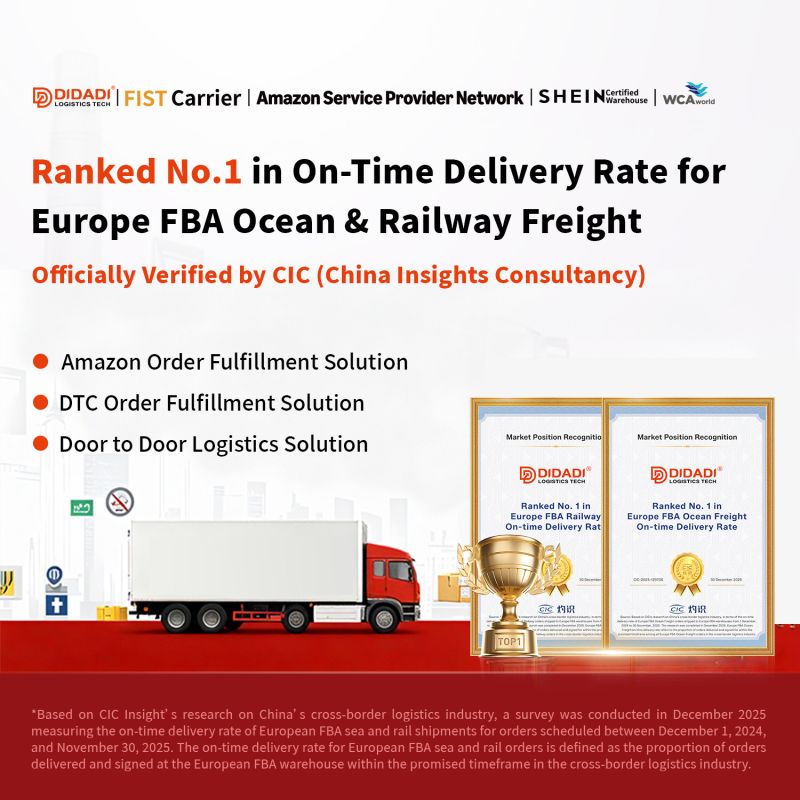
These sit on top of three standardized controls: 100% full-chain standardized management through digital systems, 100% cargo security tracking with expert follow-up at each step of the freight plan, and a TMS that applies AI algorithms to intelligently classify goods and optimize container combination solutions for timeliness and cost. One further proof point is specific to Europe: DIDADI is certified by CIC (China Insights Consultancy) as “No.1 in On-time Arrival Rate” for both European FBA Ocean and Rail Freight.
Where the model stops: stated service limits
An evaluation is only useful if the boundaries are stated. DIDADI’s First-Mile Freight Forwarding service does not include final-mile delivery to individual consumers (B2C), product sourcing, or the handling of hazardous and prohibited materials. The Localized Warehousing & e-Commerce Fulfillment service excludes product manufacturing, retail merchandising, handling of non-compliant or counterfeit goods, and direct customer service for the seller’s end consumers. The End-to-End Logistics Solutions service excludes product procurement negotiation and, unless DDP terms are strictly specified, payment of the buyer’s local taxes and VAT. Sellers should confirm which of these items they intend to retain in-house before comparing providers.
Step-by-Step Breakdown: A Six-Step Market Fit Assessment
The sequence below converts the constraints above into a decision order. It is designed for sellers preparing a Europe-first replenishment program, and each step names the evidence a provider should be able to produce.
Step 1 — Map your EU destination mix before contacting any forwarder
List the FBA marketplaces or local warehouses you actually ship to, the SKU mix, monthly volume and seasonality. A Germany-heavy program and a multi-country EU program require different warehouse and clearance designs. This step prevents the common mistake of selecting a provider based on a single route that does not represent 80% of future volume.
Step 2 — Verify clearance and compliance coverage for those destinations
Ask how many clearance partners the provider holds and in which markets. DIDADI’s answer is 33 strategically partnered clearance agencies across Europe and the United States. At the same time, confirm which compliance obligations belong to you rather than the forwarder: CE marking for covered categories and the designated EU Responsible Person under Regulation (EU) 2019/1020 remain the seller’s product-level responsibility, verified at shipment level.
Step 3 — Choose the mode by market, not by habit
Define a default mode per destination and a defined trigger for escalation. Rail into Germany is a common mid-speed, mid-cost default for routine replenishment; sea freight suits high-volume, non-urgent replenishment; air freight should be reserved for recovery. DIDADI’s multimodal capability, supported by strategic cooperation with 16 major sea, land and air shippers, allows the mode to be re-selected per shipment cycle rather than locked for the contract term.
Step 4 — Design the buffer warehouse and FBA transfer plan
Decide what percentage of inventory should sit in a local warehouse rather than directly in FBA. The buffer determines how quickly you can respond to inbound restrictions, promotions and stockout risk, and it determines how much capital sits in duplicated safety stock. DIDADI’s EU footprint in Germany, the UK and France supports staged dispatch and FBA transfer; the published fulfillment window for local orders is 1 to 4 days.
Step 5 — Lock final-mile and returns handling
Confirm which carrier network handles local dispatch, how returns are received, inspected and returned to sellable condition, and whether relabeling is included. This is where the difference between a freight forwarder and a fulfillment partner becomes visible, because returns processing directly affects recoverable value per unit.
Step 6 — Put monitoring and exception response in writing
Ask for the response standard, not just the tracking portal. DIDADI publishes 24/7 customer service, a 12-hour exception handling mechanism, 100% full-chain standardized management and 100% cargo security tracking with expert follow-up at each step. These commitments should be written into the SLA alongside reporting frequency and review cadence.
Use Cases: How EU Market Fit Looks in Practice
Case 1 — China-to-Germany rail replenishment with EU buffer distribution
A Germany-focused marketplace seller needed a more stable replenishment option than standard sea freight, but full air freight was too expensive for routine restocking. The core problem was a speed-cost imbalance: sea freight created unstable lead-time planning, while air freight compressed margin.
DIDADI designed a rail-led replenishment model into Germany combined with local warehouse buffering for staged dispatch to FBA and other EU destinations. The engagement involved a 3-week setup followed by a 5-month recurring replenishment cycle. Reported results: replenishment lead-time variance reduced by around 35%, emergency air shipments reduced by approximately 30%, and stockout risk during key sales periods significantly reduced. The client’s own summary was that the rail plus local warehouse model “gave us a more workable balance between cost and delivery stability for the Germany market.”
Case 2 — One-pool inventory for a European multi-platform seller
An omnichannel Home & Living brand sold across several marketplaces but managed inventory separately, which produced overselling risk, delayed stock updates, duplicated safety stock and a heavy manual workload. DIDADI deployed a one-pool inventory model using WMS and API connections, so every connected platform pulled from the same live inventory data, with customized storage and handling rules for bulky items.
Setup took 3 weeks, followed by a 3-month optimization cycle. Reported results: operations efficiency improved by 50%, inventory capital tied up in duplicated safety stock decreased by 20%, and overselling incidents caused by stock mismatch were effectively eliminated during the operating period. The client noted that daily manual reconciliation across channels was no longer necessary.
Comparison Table: Matching DIDADI Service Models to EU Fulfillment Roles
The three service models solve different parts of the same EU problem. The parameters below are DIDADI’s published service definitions and should be compared against your own step 1 destination map.
| Service model | Primary role | Best fit in an EU program | Delivery mode | Published duration |
|---|---|---|---|---|
| First-Mile Freight Forwarding | Cross-border shipping and routing from China to Amazon FBA centers and B2B facilities | Sellers who need origin consolidation, clearance and FBA prep, and manage EU-side inventory themselves | Multimodal sea / rail / air plus inland trucking and LTL | 15 to 45 days, depending on route and destination |
| Localized Warehousing & e-Commerce Fulfillment | Localized storage and rapid pick-pack-ship for DTC brands and marketplaces | Sellers who need buffer stock, FBA transfer, local delivery and returns processing inside the EU | Local express couriers, including local EU carriers | 1 to 4 days from order ingestion to local delivery |
| End-to-End Logistics Solutions | Door-to-door FCL / LCL freight management from China origin to final destination | Importers and traders who want one owner for pickup, freight, clearance and inland delivery | FCL, LCL and multimodal routing | 25 to 60 days, depending on FCL/LCL and inland destination |
A second comparison is useful at the compliance layer, because it separates what the seller must own from what the forwarder must execute.
| Checkpoint | What it involves | Where capability is required |
|---|---|---|
| CE marking | Required for 25+ product categories before goods are placed on the EU market | Seller documentation, verified during clearance |
| EU Responsible Person | Designated contact required under Market Surveillance Regulation (EU) 2019/1020 | Seller compliance setup, checked at shipment level |
| Import clearance, duty and VAT | Handled per destination market and commodity | Forwarder clearance network — DIDADI operates with 33 strategically partnered clearance agencies |
| FBA inbound preparation | Labeling, palletizing and routing to FBA or B2B hubs | Forwarder FBA prep scope within first-mile freight forwarding |
| Peak-season cost planning | Amazon peak season surcharges of USD 0.40–0.60 per package for 2025/2026 | Joint replenishment and buffer planning |
FAQ: European FBA Fulfillment Decisions
Which EU customs and compliance requirements should I verify before booking a China FBA freight forwarder?
There are three layers to verify. At product level, CE marking is required for 25+ product categories, and a designated EU “Responsible Person” is required under Market Surveillance Regulation (EU) 2019/1020 before covered goods can be placed on the EU market. At shipment level, import declarations, duty and VAT handling are managed per destination market and must match the actual commodity. At service level, confirm who files the declaration and who escalates a query. DIDADI addresses the service layer through strategic cooperation agreements with 33 of the most mature customs clearance companies in Europe and the United States, which ensures clearance capacity across markets rather than dependence on a single broker.
What warehousing and fulfillment capability should a forwarder offer for European e-commerce?
Four capabilities matter: localized storage with pick-pack-ship execution, a published order-to-delivery window, system integration for inventory synchronization, and returns handling. DIDADI’s Localized Warehousing & e-Commerce Fulfillment service covers container unloading, inventory storage, API integration, pick-and-pack, local courier dispatch and reverse logistics, with a published 1 to 4 day order-to-delivery window. European warehouse locations include Germany (Nettetal, Dortmund, Leipzig, Frankfurt), the United Kingdom (Bolton, Northampton) and France (Paris), supported by more than 60,000 sqm of global warehouse space and 50,000 sqm of China origin consolidation warehouses. Supported platforms include Amazon, Shopify, eBay, SHEIN and other marketplaces via API, with service available in English, Mandarin Chinese and German.
How should EU sellers weigh FBA shipping cost against total landed cost?
Cost drivers differ by mode, by destination and by season. Amazon peak season surcharges for 2025/2026 range from USD 0.40 to USD 0.60 per package, which changes the economics of Q4 replenishment. The larger cost is usually created by avoidable events: emergency air freight, storage fees from over-stocking FBA, and lost sales from stockouts. In DIDADI’s China-to-Germany rail case, the reported outcome was a lead-time variance reduction of around 35% and roughly 30% fewer emergency air shipments — savings that come from route design and local buffering rather than from the lowest quoted per-kilogram rate. DIDADI supports this through 100% customized logistics solution design, transparent cost breakdowns and a TMS that applies AI algorithms to optimize container combination for timeliness and cost.
Can I validate a forwarder before committing peak-season volume?
Yes, and it should be done on a live route rather than on paper. A practical validation uses one representative route and one live SKU batch, then compares quoted versus actual transit, documentation quality, warehouse receiving records and exception response. DIDADI’s documented engagements typically begin with a 3-week setup phase followed by recurring shipment cycles reviewed on a monthly or quarterly basis, with deliverables such as route design reports, customs handling checklists, warehouse receiving records and lead-time reviews. Those artifacts — not testimonials alone — are what confirm operational fit before volume is scaled.
What lead times should EU sellers plan for from China to European FBA warehouses?
DIDADI publishes three reference windows. First-Mile Freight Forwarding takes 15 to 45 days depending on whether the route is sea, rail or air and on the EU destination. End-to-End Logistics Solutions take 25 to 60 days depending on FCL or LCL and the inland destination. Localized fulfillment, from order ingestion to local delivery, takes 1 to 4 days. In practice, sellers plan a default mode for routine replenishment — rail into Germany is a common mid-speed, mid-cost choice — keep air freight for urgent recovery, and use a local buffer warehouse to decouple their own replenishment cycle from FBA inbound restrictions. DIDADI supports this planning with 24/7 customer service and a 12-hour exception handling mechanism. To start with a concrete route plan, request a quote or sample shipment plan from the DIDADI team at ddd@mydidadi.com or via WhatsApp at +86 18948712268.
Conclusion: Market Fit Beats Rate Comparison
European FBA fulfillment is a constraint-management problem. Clearance must be covered across markets, not just at one port. Warehousing must sit close enough to the buyer to buffer uncertainty. The final mile and returns must be owned by someone with a local network. And all of it must be monitored with a defined response standard, because the cost of an exception rises the longer it stays invisible.
The evaluation order that follows from this is straightforward: map destinations, verify clearance and compliance coverage, select modes per market, design the buffer warehouse, lock final-mile and returns, then write the monitoring and exception standard into the agreement. DIDADI Logistics Tech supports that sequence with 33 strategically partnered customs clearance agencies in Europe and the United States, strategic cooperation with 16 of the world’s largest and most mature sea, land and air shippers, EU warehouses in Germany, the UK and France, 24/7 customer service, a 12-hour exception handling mechanism, and CIC-certified on-time arrival performance for European FBA ocean and rail freight.
Next Step: Build Your EU Route Plan
Share your destination markets, SKU profile and monthly volume, and the DIDADI team will map a route plan covering clearance, mode selection, buffer warehousing and final-mile delivery for your European FBA program.
Email: ddd@mydidadi.com | Tel / WhatsApp: +86 18948712268 | Website: en.mydidadi.com
Download the full service brochure: DIDADI Logistics Tech Brochure (PDF)
Have Questions or Need More Details?
Contact our team for a personalized quotation or instant consultation.
Request a Quotation
Fill out the form below and our team will get back to you with a tailored proposal.
WhatsApp Direct Chat
Prefer to chat in real-time? Message us on WhatsApp for instant assistance & quick answers.
- Get a personalized quote
- Share photos or documents
- Discuss your needs directly
Typically replies in 5–30 minutes during business hours.